June 7, 2017

My Ongoing Vegan Journey

I visit my family in China at least every other year. My mother always saves in the freezer the food that I’ve missed while I was gone, such as soybeans from spring, shrimp from summer, water chestnuts from previous fall, and the dumplings from the previous Chinese New Year’s dinner. “You were the only one who wasn’t home for the New Year. I’ve been waiting for you to come home and eat the dumplings; if you eat them, it would be as if you’d never left,” Mother said.

Last year Mother was very pleased that I would stay home for the New Year after being absent during the New Year for the past 12 years. But she and I struggled with my vegan diet because I had to reject many dishes that she had loved to make for me. It was also hard for my other relatives to understand: “How can you get enough protein?” “Vegan food is boring.” “Animals are to be eaten.” "Are you a Buddhist now?" 

One night after dinner, I asked my mother about the pigs that she used to raise and she told me a pig story that I will remember for as long as I live.


The Pig Story Mother Told
When I was a young child, every year my mother raised two pigs. At the end of each year, one pig would be sold to the market, the other would be kept for our family to eat. One year, my mother couldn’t find any baby pigs. It happened that she went to visit my aunt, whose neighbor just had newborn baby pigs. But there was only one female baby that was to give away. She usually liked to raise male pigs, but as she didn’t have a choice, she took the female baby pig home. (Let me call that pig Bai)

Bai only had a tiny place to live because my parents stored many things such as farming tools in her small roofed pigsty before she arrived at our home. But Bai kept her place very neat: eating area, sleeping area, and pooping area. The golden hay she slept on was always dry and clean, and she somehow made her poop stand up leaning against the wall near the poop hole. Being clean, Bai became my mother’s favorite pig. Whenever she fed Bai, she patted Bai on the back as Bai was eating with loud happy sound; Bai would look up to look into my mother’s eyes while chewing.

A year passed and the day came. The man from our village parked his tractor on the dirt road in front of our house. Bai was put in the back of the big tractor that would take her to a market in town. When the tractor began to move, Bai jumped off the moving tractor and ran back to my mother who was standing on the dirt road seeing her off. Bai rubbed her head against my mother’s leg as tears poured out of Bai’s big black eyes and wet her eyelashes. Mother patted her back and also cried.

As the tractor man was waiting, my mother got on the back of the tractor with Bai and patted Bai’s back all the way to the market. Bai rubbed against my mother and her tears wet my mother’s clothes.

At the market, Bai was weighted and herded together with other pigs. Her clean, white body stood out among other pigs. Mother was standing outside the fence as Bai was herded away. Bai kept looking back again and again, her clean back was blackened by the dirt from other pigs. Then she did another remarkable thing. She pushed away other pigs, walked against the herd, and somehow got out of the fence and ran towards my mother. She rubbed, for the last time, my mother’s leg with her head; tears kept pouring out of both of their eyes.

Bai was again taken away and being herded towards another place where my mother couldn’t see. As Bai was about to disappear from her eyes, my mother called. Bai turned her head to look for my mother as she was being pushed further and further away…. Outside the fence, my mother couldn’t stop sobbing.

My Meat Addiction
I grew up loving eating pork, including pig fat. I loved to put frozen white pig fat in my steamy hot rice and let the fat melt into rice.  I would finish a full bowl of rice without any interest in my chopsticks touching any other dishes on the table. I loved pork buns too. But my favorite dish was Grandpa’s red-cooked pork (braised pork in brown sauce). I loved it so much that I became so good at making the dish myself at age 12; one time Mother let me be the chef to make red-cooked pork when a relative visited us.

Visiting home from college, I was still sleeping in when Grandpa rode his bike from his house to knock at my parents’ door as he often did when I was in town. He walked into my room as I sat up in bed feeling a little upset that he had interrupted my sleep. “Come for lunch today! I’m going to make your favorite red-cooked pork!” Grandpa would say with a big smile on his face. “Come early!” He added before he left for the market to buy pig meat.

Pork, beef, chicken were the three kinds of meat that I ate the most. After coming to the US, I missed and craved for the homemade meat dishes. I lived in a suburban town north of the Golden Gate Bridge far from Chinatown, Chinese grocery stores, and Chinese friends. Whenever I visited a Chinese friend in the Bay Area, I would stuff myself with meat dishes until my stomach hurt. Whenever I went to Chinatown in San Francisco or Oakland, I always looked for pork buns and other various dim sums. Looking at steamy buns on the big bamboo steamer from outside the restaurant window, my eyes brightened. I swallowed before walking in the restaurant.


Bearing Witness of Animals’ Sufferings
Actually, I have my own crying pig story from childhood. I was about seven or eight years old. It was an extremely hot summer and our female pig became very ill. So my mother had to sell the pig several months earlier before the year-end. In the morning, a man from our village came with a flat wooden board on two wheels attached to the back of his bicycle. The pig was let out of the pigsty. To our surprise, without the man forcing her, the pig lay herself on the wooden board. I saw tears roll out of her big black eyes. I had never seen a pig cry before. Mother and I both stood there and cried. She asked me to go to the kitchen to get the pork bun that she had asked me to save for breakfast the next day. Mother put the bun, the best food in our home, on the wooden board next to the pig’s mouth. The pig didn’t move or sniff. She just lay on the board crying as the man was tying her up to the wooden board. The man rode his bicycle away with the pig in the back. I ran after the bike, eyes blurred by tears. I ran and ran until I couldn’t see the man and the pig anymore….

Besides pigs, I felt many other animals’ suffering too as I  grew up.

A dozen live geese were hung upside down with feet tied to the sides of the rear rack of a bicycle. One goose with the longest neck had to constantly lift its neck upward to avoid touching the moving road. Whenever it rested its neck lower, its neck struck the rough road and bled, and the goose moaned. The road ahead had no visible end; the goose kept trying to lift its head, upward, upward again, and again…. Its weakening moan lingered in my heart even after the bicycle was long gone. I was seven years old and missed my bus, walking home alone as dusk was darkening. I put my hand on the front of my neck as if it might bleed too. Soon, I felt as helpless as the long-necked goose, as the dark long way home kept unfolding ahead of me.

In front of a restaurant, a mother goat was tied to a bench and a small goat stood next to her. A man came out with a knife. He thrust the knife into the neck of the mother goat and she fell on the ground, violently struggling. The little goat knelt down and fell on the ground even before the man thrust the knife into its neck. Across the street from the restaurant, I was waiting for my bus after school, horrified by the slaughter scene.

I studied in a medical university in China for eight years and the daily casual cruelty to animals began to numb my heart. Near the end a laboratory class, one of my classmates injected air into a mouse’s blood vessel and the poor mouse ran frantically from one lab table to another until it dropped dead. Almost every day, walking out of the dim long hallway on my way to the dining hall, I passed by half-dead rabbits that piled in several small cages outside. The rabbits’ bloody bodies were still twitching, and the smell of their blood permeated the air. During my graduate studies, I witnessed more “normal” cruelty to animals: Rat’s heads were cut off alive with scissors. And, I experienced my own cruelty.

My Mouse-Killing Experiment in the Lab
In the second year of my graduate studies in the School of Public Health, I came up with a proposal to study the side effects of some environmental toxin on reproductive systems. White mice were the testing animals that we used most frequently in our lab. I wasn’t interested in the experiment or the graduate program I was in, but I kept pretending that I cared and did what I was supposed to do.

Every day for a month or so, I went to the animal house where the white mice were raised. I grabbed the tail of one mouse and put it in a small cage. At the lab, I killed the mouse by quickly separating its head from its body. A tiny sound later, the mouse would be soft, no more frantically trying to crawl away from me or bite me. Without any feelings, I cut open its belly….

Reconnecting and Reconciling with Animals
I had been a meat eater most of my life until about four years ago when I was taking a walk at a friend’s serene ranch. I passed by many cows grazing peacefully in the sun. The blue sky, the green grass, the soft sunlight, the rolling hills in the distance, and the calm gaze from the cows slowed down my steps and my mind. I paused for a long time to look at one cow looking into my eyes and I bowed. I bowed to that cow, bowed to all the cows, bowed to all the animals that I had eaten or harmed. I bowed and bowed and bowed with two palms together. I said to them: I don’t want to harm you anymore; I don’t want to eat you anymore.

The journey of reconnecting to all animals besides cats and dogs and reconciling how I feel about animals with what I eat has been a journey full of uplifting revelations and hopeless setbacks. After reducing and then not eating meat for four years, I realized one morning that I hadn’t had my decade long morning diarrhea for a while.

But it doesn’t mean that I no longer missed meat or justified myself to eat meat again. Sometimes I would fall back to eating meat when I saw someone that I admired for doing good work in the world eat meat, or when I had dinner in a loving community with a lived-a-good-life animal’s meat on the table, or when eating my mother’s dishes was the filial thing to do, or when I simply had the impulse to eat meat.

Over a year ago, I stayed at a friend’s house. I made it very clear to everyone that I ate vegan, but one day my hostess insisted that I try some organic chicken she just bought. I declined. Later in the afternoon, nobody was home. I sat there suddenly feeling restless--I wanted to try that chicken! My heart began to race. I opened the fridge door: There it was--the chicken! My heart was pounding harder. I took out one piece of chicken with my trembling hand and instantly closed the fridge. I walked to the window and listened to make sure nobody was coming back. I put the chicken in my mouth. It tasted so good that I went back for the second piece, and then the third. The whole time my heart was pounding hard and I was concerned that someone might see me, a dishonest vegan. But right then, after the third piece of chicken, I realized that I wasn’t that interested in eating chicken after all because the third piece began to taste bland and strange. Deep down I knew that, from that moment on, I would be free from desire of eating chicken.   

When I went to Chinatown, I still desired to eat pork for a while after I quit meat. Last year, before going back to China, I went to one of my favorite restaurants in Chinatown with a friend and ordered meat dim sums because they didn’t have vegetarian ones. I had one bite of the dim sum that had pork in it and, surprisingly, it tasted so bad. That killed my further desire for pork.

A Sad Story on a Dairy Farm
A couple of years ago, I was at The Pollination Project salon when the founder of Food Empowerment Project, Lauren Ornelas, gave a talk. She shared a story about a mother cow on a dairy farm, who hid one of her twin calves behind a rock and went to breastfeed the calf every day secretly. The farm staff noticed that the cow’s milk output was low and one day followed the cow and found the hidden calf. When Lauren played for us the audio recording of the mother cow and the calf echoing each other’s calling as the calf was taken away, I was gripped by such a deep sadness that I couldn’t stop crying during the rest of the talk.

My Ongoing Journey
These experiences have increasingly made me reflect deeply why I have such strong feelings for animals, despite that I’ve tried to numb or deny those feelings in me. Those feelings are natural! My connection with animals is an innate quality that I experience when my heart is free, open, and connected. It is a constant reminder that we are all connected. I want to honor that connection as I began to understand why there are so many love warriors who dedicate their lives to animals' welfare around the globe.

The other wonderful benefit that I gained from stopping eating meat and dairy products is my revived interest in cooking. Beginning in high school, I lost interest in cooking and lost confidence even in helping in the kitchen. I was considered a hopeless cook by those who were close to me in the past. Now, I feel creative in the kitchen realm again! With chopped zucchini, carrots, kale, mushrooms and beans, I could make a delicious quinoa dish!

With the practice of taking only what I need, I also have a chance to look at my other insatiable desires in food every day. Walking through grocery stores, I feel more freed than before from my old cravings for meat and many heavily spiced snacks, including vegan cheese and kale chips. At a Chinese vegan restaurant, I don’t need to order fake meat to gratify me. With occasional giving-ins to my cravings, I begin to enjoy simple food more and my taste buds are gradually coming back to their natural sensitivity.

Mother’s Cooking
“If you were a pig, that would be your fate,” Mother said in tears after she told me Bai’s story. I was already crying uncontrollably while listening to the story. For three days, I found myself continuously weeping in my closed bedroom as I kept seeing so vividly Bai’s tearing eyes looking back at my mother as she was herded further and further away…. 

Tears and heartaches helped awake me to reconnecting with animals. Asking animals for forgiveness is the first step, and I'm determined to change, starting from educating myself about the harm we do to animals, stopping harming animals, knowingly or unknowingly, and changing what I eat and how I live every day.

Eating vegan at home with my family in China was very difficult in the beginning. But after weeks of struggle, my 
mother began to buy various kinds of vegetables. She said each vegetable was 


unique and gave us different types of strength. But sometimes, I could still detect chicken broth in the vegetable dishes she made. When questioned, she said it was all vegetables. :) But I was amazed by my mother’s ability to adapt. Within a couple of months, she discovered more and more vegan dishes that she could make. She began to fall in love with the vegan restaurant near where she lives and brought back booklets on healthy vegan eating to give away to her family, friends, and acquaintances. She herself reduced dramatically her meat consumption--this is what I had sought because of her high blood pressure and high cholesterol. When my father and mother returned home late from visiting a relative far away, I would cook them a simple vegan meal. Looking at them eating the meal I prepared was one of the happiest moments in my life as a daughter. 

****************************************************************************
Related documentary films: Earthlings, Cowspiracy and more.
A child's commitment: "I don't want to eat animals!"

May 22, 2017

Awakening the Heart of Kindness: Filial Piety in China

About six months ago, I landed in Shanghai on my way to live with my parents for five months in Yancheng, four hours northwest of Shanghai. I arrived with a strong intention--letting go of my old perceptions about China, where I was born and raised and had lived until after college, seeing everything with new eyes, integrating different parts of myself that have lived on either side of the Pacific, and giving sincere thanks to my family, especially my parents, who made my human life possible. Also, for the first time, I began to consciously look for kindness wherever I went. In Shanghai, as I walked in narrow alleys, crossed busy streets, or interacted with breakfast vendors, I wanted to see beyond the masks of indifference, distrust, or even rudeness; I wanted to connect with the human hearts beneath those masks that might be lonely, wounded, and longing to connect. It had been a long inner journey that brought me to that mental place. 

An Inner Journey from Despair to Hope
Many years ago there was a news story that went viral in China: An old man was injured in a hit-and-run accident, but nobody helped until a young man got him to the hospital. When the sons of the old man came, they accused the young man for having hit their father and he should pay for the hospital bill. Their argument was: If you didn’t hit our father, how could you be so kind to get him to the hospital? When the young man asked the old man to tell the truth, the old man, under the pressure of his sons, in tears, “agreed” that the young man was the one who hit him. Similar stories about how “good Samaritans” got themselves in trouble for helping a stranger continued to appear in Chinese news.

About a year ago, a deep sense of hopelessness struck me again after watching a video comparing two accidents. One was a dog hit by a car on a highway. Soon, another dog walked to the middle of the busy highway to pull the wounded dog off the road. The second accident showed a little Chinese girl was hit by a van in the middle of a not-so-busy street with shops and street vendors on both sides. The van stopped for a second, then hurriedly drove off from the body of that little girl. Many cars and people passed by that girl; some stopped to look, but nobody helped. One driver ran over the girl’s leg without seemingly noticing it. Finally, a woman came to the scene to move the girl off the street and began to call out for help. Then the girl’s mother came….

The next morning, I woke up with such disgust for my “compatriots” across the Pacific. Then I turned on my phone and saw a message from my gege: older brother, who forwarded me an essay on how Chinese parents selflessly care for their children and yet their too-busy-working adult children fail to visit them and tend to their needs.

It reminded me of a true story I read before: A poor peasant scrambled and saved money to get his son through college. When the son got a job, he changed his phone number without telling his father. The father couldn't reach his son and became worried. Every week, he walked over 20 kilometers into town to call his son’s old number. It never occurred to him that he had been abandoned by his son. He became so worried about his son that he turned to the media for help to find his missing son. When he found his son, his son was furious because his father made him lose his face. The heartbroken old man returned to his threadbare home alone.

I was moved to tears by the message in the essay my brother sent that we children ought to give back to our parents. Tears uplifted me: Filial piety, a virtue of respect for one's parents, elders, and ancestors, could be the entry point to revive kindness in China! As the ancient Chinese Philosopher Mencius said, “Extend the respect of elderly in one's family to that of others; extend the love of young ones in one's family to that of others.” Filial piety is deeply rooted in Chinese society dating back millennia. Yet, in recent decades, the cases of children neglecting their aging parents or mistreating their parents as mere free nannies increased to a worrisome degree. In 2013, China enacted a law called “Protection of the Rights and Interests of Elderly People,” stating that children should visit their parents “often” (if they don’t live together) and tend to their emotional and spiritual needs.

But my decision to spend more time with my parents in China was not out of filial obligation, but a longing in my heart to be physically closer to my parents and to give thanks to them on a day-to-day basis for what they have done for me. In other words, I wanted to cultivate kindness within myself at the root level. While cultivating kindness within, I began to see kindness in many others in China. Instead of being cynical about the ugly Chinese, I began to look at modern China with fresh eyes.

A Vegan Restaurant  
During the entire first month in China, I spent most of my time with my parents indoors. Deep down, I was still afraid that the prevalent consumeristic culture outside would engulf me again. Then one day, my gege said, let’s go to the nearby vegan restaurant for dinner. 
File:Lotus flower (978659).jpg - Wikimedia Commons

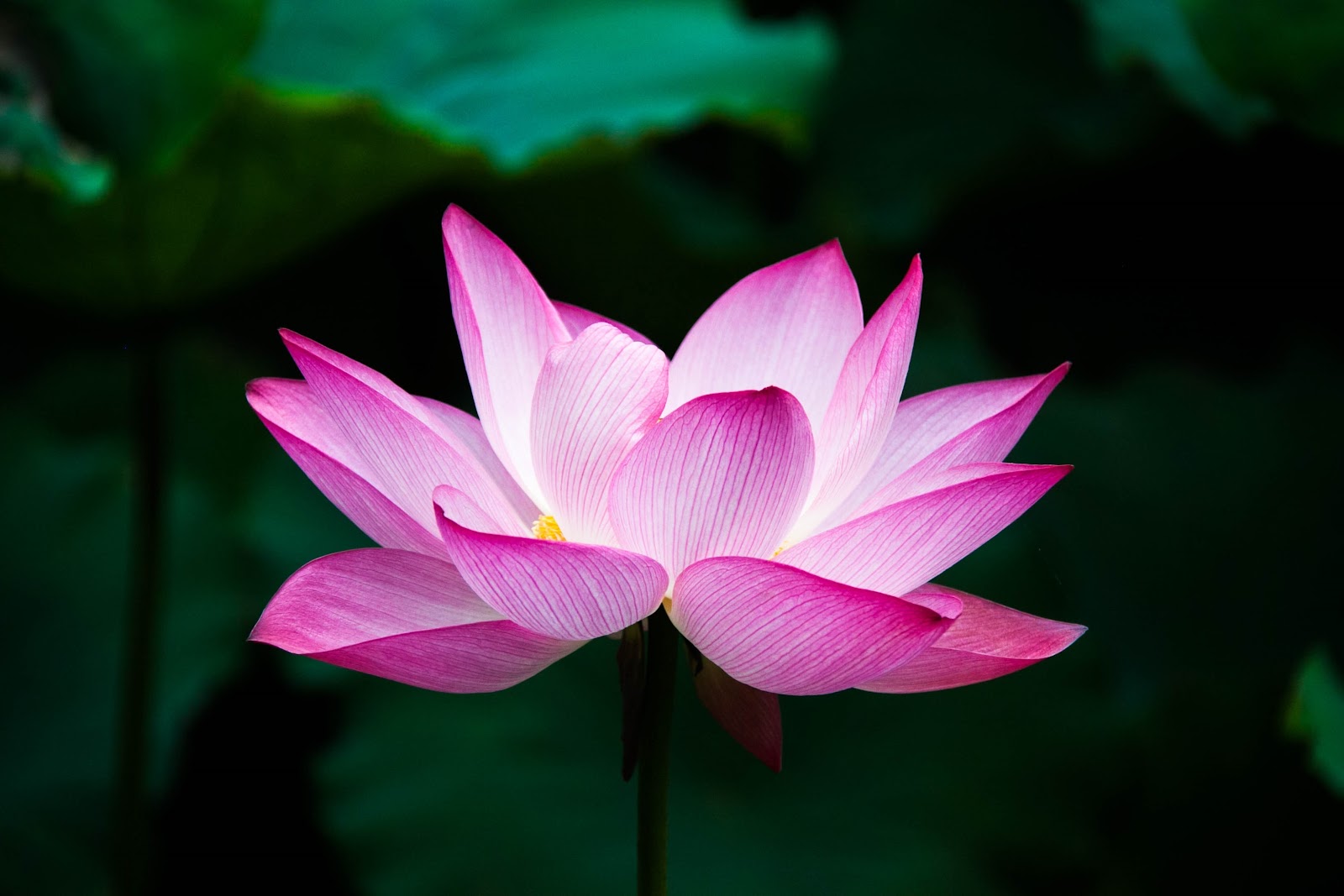
Oh, what a treasure of that special restaurant--忆品青莲 (The Qing Lotus)! It instantly changed my experience in China. The moment I walked in, something heavy in my heart was lifted. We were greeted warmly as we walked in before being led to the room we had reserved upstairs. The name of our room was “上善若水“ (Supreme good is like water). The next room’s name was “厚德载物“ (High virtues enables one to take high position with important responsibilities). Outside the room, a wide bookshelf stood against the wall, filled with classic books on Chinese traditional values. In front of the bookshelf was a long desk for guests to practice calligraphy with water on special paper.

The waitresses dressed in simplified traditional clothing spoke softly with smiles and sincerity. While taking our order, they reminded us that we had ordered enough and we could always order more dishes later if needed. I noticed the signs under the glass table top, “光盘” (Finishing the plates clean--no waste of food) and “吃素是福” (Eating Vegan diet is a blessing).

IMG_2367.jpg

 After dinner, we walked downstairs, passing the common eating area, to the entrance. Close to the stairs stood another bookshelf filled with books and DVDs on filial piety, kindness, and healthy vegan diet. The books and DVDs were free for people to take. A  white display board next to the bookshelf addressed customers: 

Dear Dining Families, we welcome your kind visit! The Qing Lotus uses “Respect Nature (Heaven) and love humanity” as the general guideline for our vegan culture and business operation, and observes healthy living, protecting Earth, valuing life, loving humanity, and serving the public good as our principals. While spreading vegan culture, we provide a platform for good Chinese traditional values to be shared and spread, and strive to plant seeds of integrity and kindness for “harmony of body and heart, harmony within families, and harmony in society,” and thus fulfill a happy human life.

It also indicated that respecting the elderly is a treasured traditional value of China. The elderly over age 80 can enjoy free meals at the restaurant; the elderly over age 70 can receive a 20% discount. At the bottom of the display board, it said: Vegan diet benefits human health, it’s kindness to our families/loved ones; vegan diet leaves low-carbon footprint, it’s kindness to the Earth; vegan diet values all lives, it’s kindness to animals.

Though my father was one month away from turning 70, they gave us the discount without requesting his ID. Our delicious meal for six only cost about $35.

The restaurant manager told me that the original owner of this restaurant was a business owner who had health issues years ago and was told by his doctor to change to vegan diet. Originally, he opened this restaurant for himself to have a place to eat with his friends and business partners. However, vegan diet somehow led him to a path of service, to restore family values, and to the Buddha’s teachings. The manager said, the surplus profit from running The Qing Lotus vegan restaurant would be donated to the local Yu Hua Zhai (雨花斋), a free chain vegan restaurant in China which was originated in 2011 by an elderly Buddhist monk who wanted to reduce suffering of animals. (Note: Currently, over 600 Yu Hua Zhai chain restaurants in China have offered 100,000 plus free vegan meals to mostly the elderly population.)

Traditional Chinese Culture Community Forum
From that day on, I became a frequent visitor of that vegan restaurant. I shared with the sisters there my hope to help my mother to take care of my father who has had Parkinson’s Disease for over a decade. One sister told me about Traditional Chinese Culture Community Forum (The Forum) that would happen in a month in a neighboring city. The Forum would teach you more about how to be a filial daughter, the sister said.

On the Forum’s website, it says the Forum is all volunteers run and the invited teachers are from all walks of life around the country who have stories and teachings to share. Nobody gets paid. The teachings cover many aspects in life besides filial piety, such as strong advocacy for vegan diet. With lingering doubt, I applied to volunteer for the Forum.

My five days at the event included three days of training beforehand and two days of volunteering at the actual Forum. During the Forum, volunteers wore the Chinese traditional clothing that was provided. On the morning of the last day of the Forum, a woman, maybe in her late 50s, came up to me and asked how she could sign up for the event in the afternoon when families had members of two generations in the audience would be invited to the stage to demonstrate filial piety. I told her to wait since it hadn't been officially announced. A few minutes later, she came again and asked when she could sign up. I said I would let her know the moment I knew when. But soon she came for the third time and told me her story in tears. She had been a very good daughter-in-law. She loved her mother-in-law and father-in-law and took very good care of them. But she resented her own mother all her life because she was given away to another family not too far from her own home when she was a young child. She never forgave her mother for giving her away. As an adult, whenever she saw her mother, she jabbed her with harsh language. Today, she wanted to reconcile with her mother with the witness of the attendees at the Forum.

When the emcee invited the families to come on stage, a dozen families stood up. There were mother-daughters, father-sons, and in-laws. The older members of each family were led to the chairs placed on the stage for the occasion and invited to sit down, the younger ones knelt down before their elders. The woman who talked to me earlier carried her disabled mother to the stage and put her down gently in a chair before she knelt down.

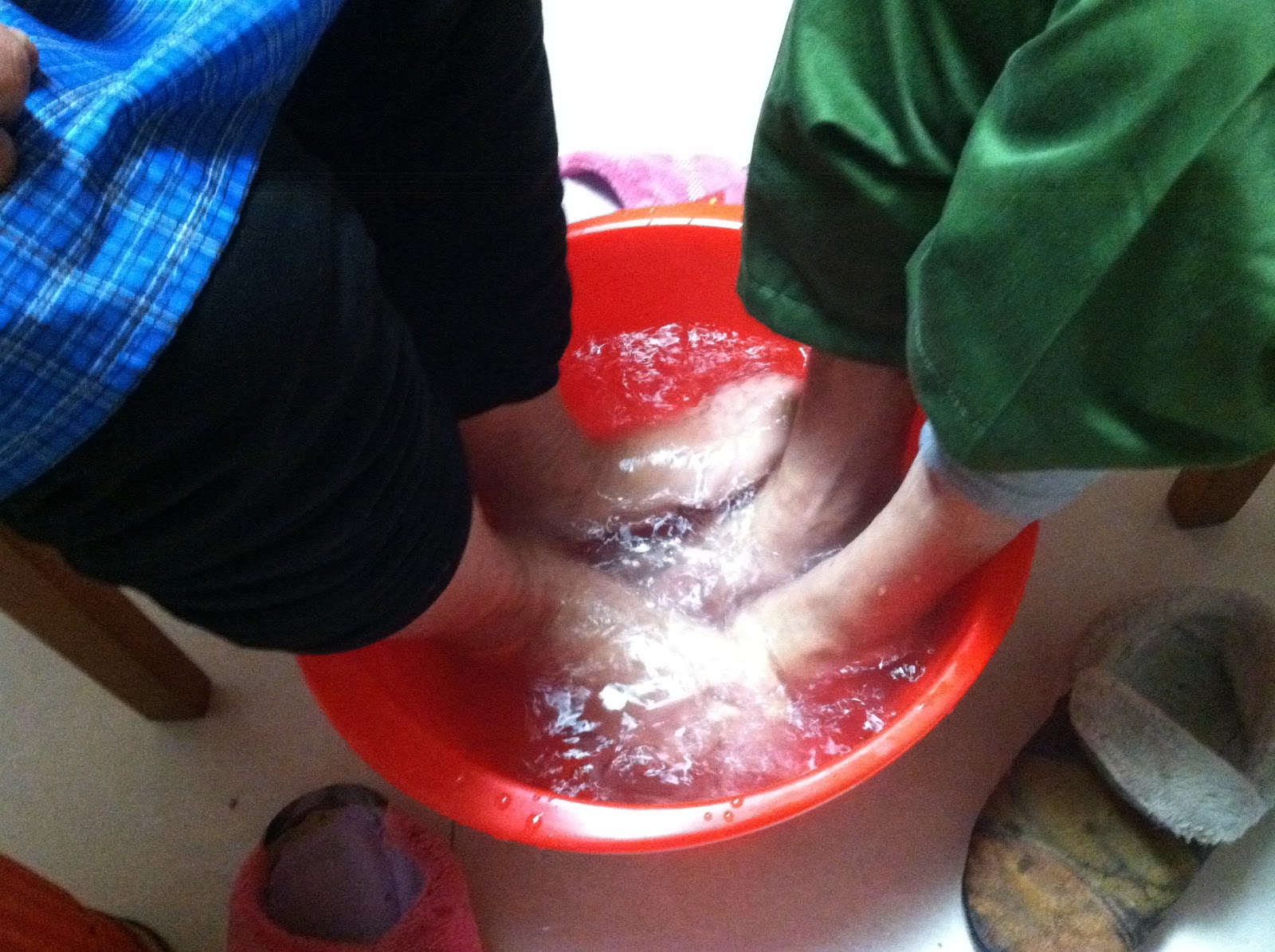
Under the instruction, the younger members of each family proceeded with traditional kowtow with heads touching the floor three times and then stood up before kneeling down again. It was repeated three times. The audience was quiet. Then the volunteers brought a dozen basins with hot water to the stage for each family. The younger family members untied the shoelaces of the older relatives, took off their socks, and washed their feet. Some older family members wiped their eyes; some young ones began to cry. At the end, the two generations from all families hugged and cried on the stage.

When the emcee interviewed the four-year-old girl who just washed her mother’s feet, the little girl couldn’t even speak clearly while sobbing, “I want to apologize to Mama. I talked back to her this morning.” Then the emcee asked the girl’s mother how she treated her mother. The mother said in tears that she hadn’t been a good daughter to her own mother either. A mother in her 60s, after hearing her daughter apologize to her, knelt down on the stage to apologize to her late mother who could no longer hear her.

As tears poured out of my eyes, I looked around, a well-dressed middle-aged man was drying his eyes. There was hardly a dry eye in the auditorium. It’s been so long since we had treated our elders with such respect! 

Becoming a Filial Daughter
The night when I returned home from the Forum, I apologized in torrents of tears to my parents for being such an ungrateful and disrespectful daughter in the past. I apologized to my father for yelling at him when he rode his bike to my boarding high school and brought me the dishes my mother made, and to my mother for treating her with disrespect in so many instances. How entitled I had felt to be treated like a princess every time when I visited home from college! I considered Mother’s hands with calluses, cuts, and black fingernails not clean enough to prepare food for me. I asked her to wash her hands twice before she could bring me my favorite dishes from the kitchen to the big living-room table where I waited. How many meals Mother prepared, shoes she made by hand, new clothes my parents bought, and bike rides taking me to and from school did I take for granted? How disrespectful of me during my teenage years to feel ashamed of my mother for being a peasant! I repented in my story that I performed, but had never apologized to my parents in person. As I apologized, my parents cried. That was a moment that I could never forget.
IMG_1732.JPG
My parents washing feet together

Before bed, I prepared hot water for my parents to wash their feet. I knelt down to untie their shoelaces and take off their shoes and socks. As I was helping my father, Mother began to untie her shoes herself and said, “Oh, you are such a good daughter. You don’t need to do this.” When both of my parents’ feet were in the same water basin, I touched their feet and washed them for the first time. When I stood up, Mother splashed water in the basin with her feet and laughed like a child.

At the Forum, I also learned that there are four levels of filial piety: First, taking care of parents’ body (offer parents food, clothing and other necessities); second, taking care of parents’ heart (make them happy and not worried); third, helping realize parents’ dreams and purpose in life; fourth, opening parents’ minds and hearts for wisdom.

On one hand, I am very thankful that I learned what true filial piety means before it is too late; on the other hand, I realized that becoming a filial daughter is a lifelong journey that requires persistent patience, gratitude and love.

Challenges in Filial Piety
But what about the children from abusive families? How could they pay their filial piety to their parents while suffering from their parents’ abuse? I have been thinking about this a lot and talked to many friends for a clearer understanding. I remember a tragic story in the book The Good Women of China that horrified and saddened me. A young girl’s father began a “physically friendly” relationship with her since her first period. Her mother knew it but was incapable of protecting her. The only way she could get away from her father was to hurt herself really bad so she could stay in hospital. She continued to harm her body in the hospital so that she would not be sent home again. For that young girl, how could she be a filial daughter to that father? She did not have a chance to figure that out because she died at age 17 after many years of going in and out of hospital. The only thing she left behind was her diary with beautiful writings about her petting a fly in a matchbox, her keen friendship with another young woman in the hospital, and her love for writing. My heart ached for a long time and still aches for that girl. How would filial piety fit into her life condition? I don’t have an answer.

In the book, The Twenty-Four Filial Exemplars, there was a story about Emperor Shùn, one of the earliest emperors in China’s ancient history. As the legend goes: Emperor Shùn’s blind father, his stepmother and younger stepbrother tried to kill him. One time, they asked him to fix the roof of the grain barn. When he was up on the roof, they set fire below to burn him. He jumped off the roof and survived. Another time, they asked him to dig a well. As he was down there, they dumped dirt on him to bury him. He survived again, but continued to respect his parents and love his brother. His filial piety moved the Heavens: When he farmed in the mountains, the elephants ploughed for him and the birds weeded for him. The old emperor Yáo heard about his high virtue in filial piety, married him with his two daughters and later trusted him with his kingdom.

In Confucianism, the virtue of filial piety, or devotion of the child to his parents and ancestors, was the foundation for all other virtues. When extended to all human beings, it nurtured the highest virtue, humaneness. Yet, filial piety does not mean blindly following the parents’ wishes; it includes skillfully dissuading one’s parents from doing immoral deeds. But how does it empower an abused child to rise up to that level of confidence and conscience? Not everybody could survive Emperor Shùn’s condition and do what he did.

But I like what Thich Nhat Hanh said, “When another person makes you suffer, it is because he suffers deeply within himself, and his suffering is spilling over. He does not need punishment; he needs help. That’s the message he is sending.” Instead of blaming and resenting our parents, we can learn to hold unconditional gratitude for their bringing us to this precious human life. This can help us build a foundation for a new beginning that would not only ground us to our roots, but also empower us to rise up from our ancestral wounds, and serve the world with our unique power that comes directly from rising up from the bestowed sufferings at our roots.
Free photo Happy Girl Cute Little Little Girl Kid Child - Max Pixel

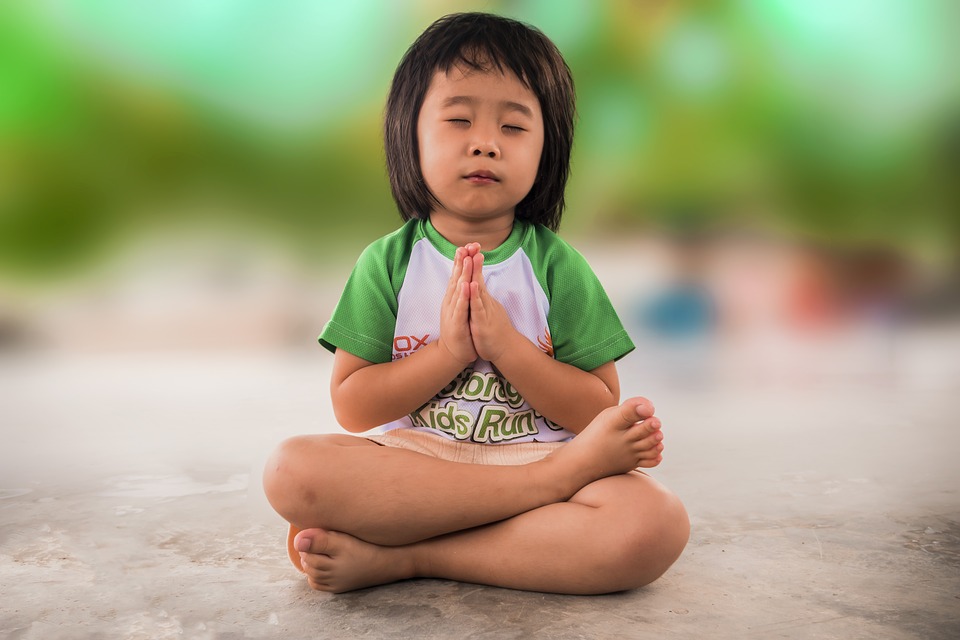
Recently, I found that sending my silent prayers out to the world’s suffering is a soothing and empowering practice. I would visualize a child, for example, hiding in a corner crying. The child could be in any place in the world at this moment. I close my eyes and visualize that child in as many details as I can and feel the child’s fear. I would transmit to the child my prayers:

“Rise up, rise up, little child. Find power in yourself and trust the universe will help you. Rise up, rise up, little child. You are the future and the world needs you to rise up. Do not pass on the sufferings you receive from your parents to your children. Rise up, rise up, little child. Find power in you and trust yourself. Break the chain of generational wounds and transform the pain in you into the power of forgiveness and love. Rise up, rise up, little child. You are the future of the world and the world needs you to rise up.”

From Filial Piety to Kindness to Strangers
For me, learning to be a filial daughter made it easier for me to have more compassion for others. If I cherish my own family, how can I not value other families? As at the Forum, the emcee and the teachers addressed the large audience as “dear families.” Family is family; we are all families. Now when I see others, I tend to see them as someone’s parents or children, knowing that they all come from a family somewhere.

How could I be upset with the young man who obliviously cut in front of me to the ticket window? He must have a mother who is worried about his well-being. How could I be upset with the taxi driver who overcharged me? She probably uses her limited income to support a child’s education. How could I judge someone who takes more than her share but gives little? I have relatives whom I love are like that and I know well some of the sufferings in which they are stuck.

IMG_1496.jpg

Gratitude for My One Big Family
Now I am back to California, again one Pacific Ocean away from my family. But I feel tremendous gratitude and joy for having them as my family in this life! I stay in touch with my parents through video calls, texts, and voice messages. The other day, my parents and I did morning exercises together for 20 minutes; our laughter joined across the digital screens and the Pacific. In the past month, I wrote two long heartfelt letters to my sister-in-law, whom I used to strongly resent for the decade long disharmony between her and my mother. I could finally see her as a precious human being who is not perfect, just like everybody else. Both letters were well received. I think of more relatives whom I used to resent or intentionally ignore, including my Auntie Two’s husband who physically abused my beloved Auntie regularly, if not daily, until she died at age 40 twenty years ago. Maybe one day, I’ll be able to forgive him completely.

I begin to play in my head like a movie the images of all my teachers from First Grade (I didn’t go to Kindergarten) to college. Where are they now? Sadly, some of my favorite teachers have already passed away. Suddenly I have an urge to visit them and say “Thank you” to them, and also to my classmates and friends who took me home for a meal or overnight because my home was far from school.

I also remember the stranger who gave me a bicycle ride home when he saw me walking and crying alone in the dark. I was seven years old. Though Mother told me not to talk to strangers, I told him that I missed the bus home when he stopped to ask me. And the many kind strangers whom I met in China during my recent trip continue to warm my heart whenever I think of them. Those strangers are my families too. And to my further joy, in my heart, my ever-expanding families from both sides of the Pacific are merging into one big family.

As Confucius believed, if there is harmony within the individuals, there will be harmony in the family; if there is harmony in all families, there will be harmony in the nation; if there is harmony in all nations, there will be harmony in the world. I also hope that if there is harmony in the human world, there will be harmony in the entire natural world as we begin treating all animals, plants, rivers and mountains as one big family.